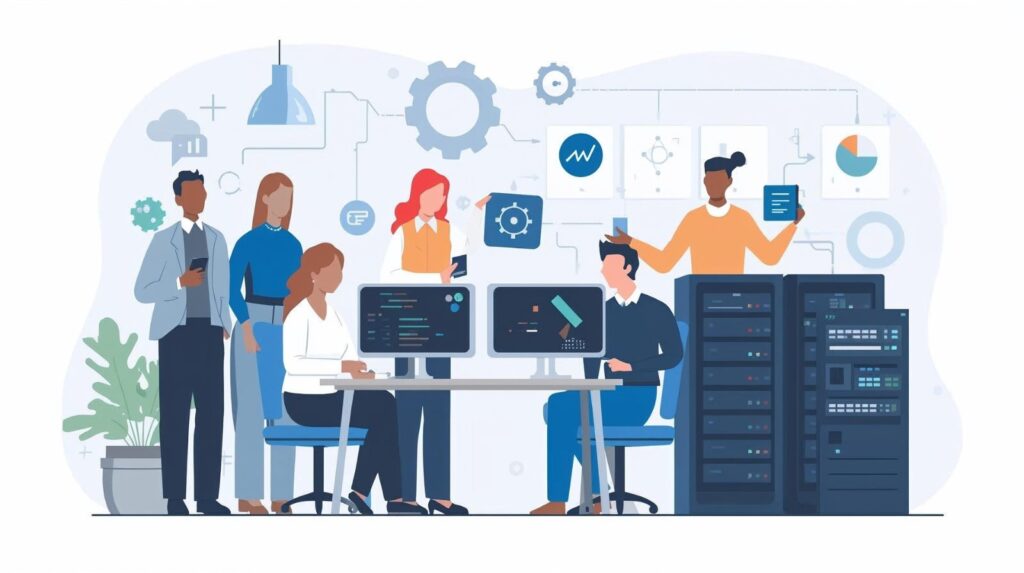

A managed IT provider delivers ongoing technology support, cybersecurity protection, infrastructure management, and strategic IT planning for businesses. Instead of reacting to problems when they occur, managed service providers (MSPs) proactively monitor systems, prevent downtime, improve security posture, and align technology with business goals.
Many businesses assume IT support simply means “fixing computers.” In reality, managed IT services include cybersecurity, cloud management, compliance support, data backup solutions, infrastructure optimization, help desk services, and long-term technology planning.
If your business relies on technology (and every modern business does), a managed IT provider plays a critical role in maintaining stability, security, and scalability.
What Is a Managed IT Provider?
A managed IT provider (also called a Managed Service Provider or MSP) is a third-party company that remotely manages a business’s IT infrastructure and end-user systems on a proactive basis.
Unlike traditional break-fix IT services — where you call for help only when something breaks — a managed IT provider works continuously behind the scenes to prevent issues before they impact operations.
Managed IT services typically operate under a predictable monthly agreement that includes monitoring, maintenance, cybersecurity, and support.
Core Services of a Managed IT Provider
Proactive Monitoring and Maintenance
The foundation of managed IT services is proactive monitoring.
Rather than waiting for servers to fail or networks to slow down, MSPs use advanced monitoring tools to detect irregularities early. This approach reduces downtime and prevents costly disruptions.
Proactive monitoring includes:
- Server performance monitoring
- Network performance tracking
- Patch management
- Operating system updates
- Security patch deployment
- Hardware health checks
- Automated alerting for anomalies
Routine maintenance ensures systems remain optimized, secure, and compliant with current standards.
Business Impact: Reduced downtime, improved performance, and fewer emergency IT incidents.
Cybersecurity Protection
Cybersecurity is no longer optional. Threats such as ransomware, phishing, and business email compromise continue to increase in sophistication and frequency.
A managed IT provider implements layered security strategies to protect business data and infrastructure.
Cybersecurity services typically include:
- Endpoint protection and antivirus management
- Firewall configuration and monitoring
- Email filtering and phishing prevention
- Multi-factor authentication (MFA) implementation
- Security awareness training for employees
- Vulnerability scanning
- Security patch management
- Incident response planning
MSPs help businesses move from reactive security to proactive defense.
Business Impact: Reduced risk of data breaches, financial loss, and reputational damage.
Data Backup and Disaster Recovery
Data is one of your most valuable business assets. A managed IT provider ensures that data is backed up securely and recoverable in the event of disaster.
Disasters can include:
- Ransomware attacks
- Accidental data deletion
- Hardware failure
- Natural disasters
- Power outages
- Insider threats
Modern managed IT providers implement:
- Automated cloud backups
- On-site and off-site backup redundancy
- Backup testing and validation
- Disaster recovery planning
- Business continuity strategies
Recovery Time Objective (RTO) and Recovery Point Objective (RPO) planning ensures minimal downtime and data loss.
Business Impact: Business continuity, compliance support, and peace of mind.
Cloud Management
Many businesses rely on cloud platforms such as Microsoft 365, Azure, or other cloud-based solutions.
Managed IT providers assist with:
- Cloud migration planning
- Microsoft 365 management
- User access controls
- License optimization
- Data governance
- Cloud security configuration
- Hybrid environment management
Cloud management ensures performance, security, and cost control.
Business Impact: Improved collaboration, secure remote access, and scalable infrastructure.
Help Desk and End-User Support
Employees need fast IT support to stay productive.
Managed IT providers typically offer:
- Remote help desk support
- On-site support when needed
- Password resets and account management
- Software troubleshooting
- Device setup and configuration
- Printer and network troubleshooting
Many providers offer defined Service Level Agreements (SLAs) to guarantee response times.
Business Impact: Increased productivity and reduced employee frustration.
Strategic IT Planning
Technology should support business growth — not hinder it.
A managed IT provider acts as a strategic advisor, helping leadership make informed technology decisions.
Strategic services may include:
- IT budgeting and forecasting
- Infrastructure lifecycle planning
- Technology roadmapping
- Vendor management
- Compliance guidance (HIPAA, SOC 2, etc.)
- Risk assessments
- Cyber insurance readiness
This elevates IT from a cost center to a strategic business driver.
Business Impact: Better decision-making and long-term cost control.
The Difference Between Break-Fix IT and Managed IT Services
Break-Fix IT | Managed IT Services |
Reactive | Proactive |
Pay per incident | Predictable monthly pricing |
Focus on fixing problems | Focus on preventing problems |
Limited cybersecurity oversight | Continuous security monitoring |
No long-term planning | Strategic IT alignment |
Businesses that move to managed IT services often see fewer disruptions and more predictable technology expenses.
Why Businesses Use Managed IT Providers
Companies choose managed IT providers for several reasons:
Reduced Downtime
Continuous monitoring prevents issues before they escalate.
Improved Cybersecurity
Layered defense strategies protect against evolving threats.
Predictable IT Costs
Flat monthly pricing helps control budgeting.
Access to Expertise
Businesses gain access to a team of specialists rather than relying on a single internal technician.
Scalability
IT infrastructure can grow with the business.
Compliance Support
Managed IT providers help align technology with regulatory requirements.
Who Needs a Managed IT Provider?
Managed IT services are ideal for:
- Small and mid-sized businesses without a full internal IT department
- Growing companies needing scalable infrastructure
- Businesses in regulated industries
- Organizations seeking stronger cybersecurity
- Companies wanting predictable IT costs
Even businesses with internal IT staff may use a co-managed IT model, where the MSP supplements internal resources.
Frequently Asked Questions (FAQ)
What is the difference between IT support and managed IT services?
IT support is typically reactive — you call when something breaks. Managed IT services are proactive and include continuous monitoring, cybersecurity management, backup oversight, and strategic planning.
How much do managed IT services cost?
Costs vary based on company size, number of users, infrastructure complexity, and security requirements. Most providers use predictable monthly pricing models based on per-user or per-device rates.
Can a managed IT provider replace an internal IT team?
Yes. Many small and mid-sized businesses fully outsource IT. Larger organizations may use a co-managed approach where the MSP supports internal staff.
Are managed IT services secure?
Reputable managed IT providers implement multi-layered cybersecurity solutions, continuous monitoring, and compliance-focused strategies to reduce risk.
What industries benefit most from managed IT services?
Healthcare, legal, financial services, manufacturing, professional services, and construction companies commonly benefit due to regulatory and security requirements.
How to Choose the Right Managed IT Provider
When evaluating providers, consider:
- Proven cybersecurity expertise
- Clear service level agreements
- Transparent pricing
- Strategic planning capabilities
- Industry experience
- Strong client references
- Proactive communication
A reliable managed IT provider should function as a long-term technology partner, not just a vendor.
About SJA Solutions
SJA Solutions provides proactive managed IT services designed to reduce risk, control costs, and support long-term business growth. Our approach focuses on cybersecurity-first strategies, continuous monitoring, predictable pricing, and strategic planning that aligns technology with your business objectives.
We help organizations minimize downtime, strengthen security posture, and build scalable IT environments that support growth.
If your business depends on technology to operate, serve customers, and grow, a managed IT provider is not just technical support — it is a strategic investment in operational stability and long-term success.